Why Fixing Water Ingress Without Finding Its Entry Point Doesn't Last
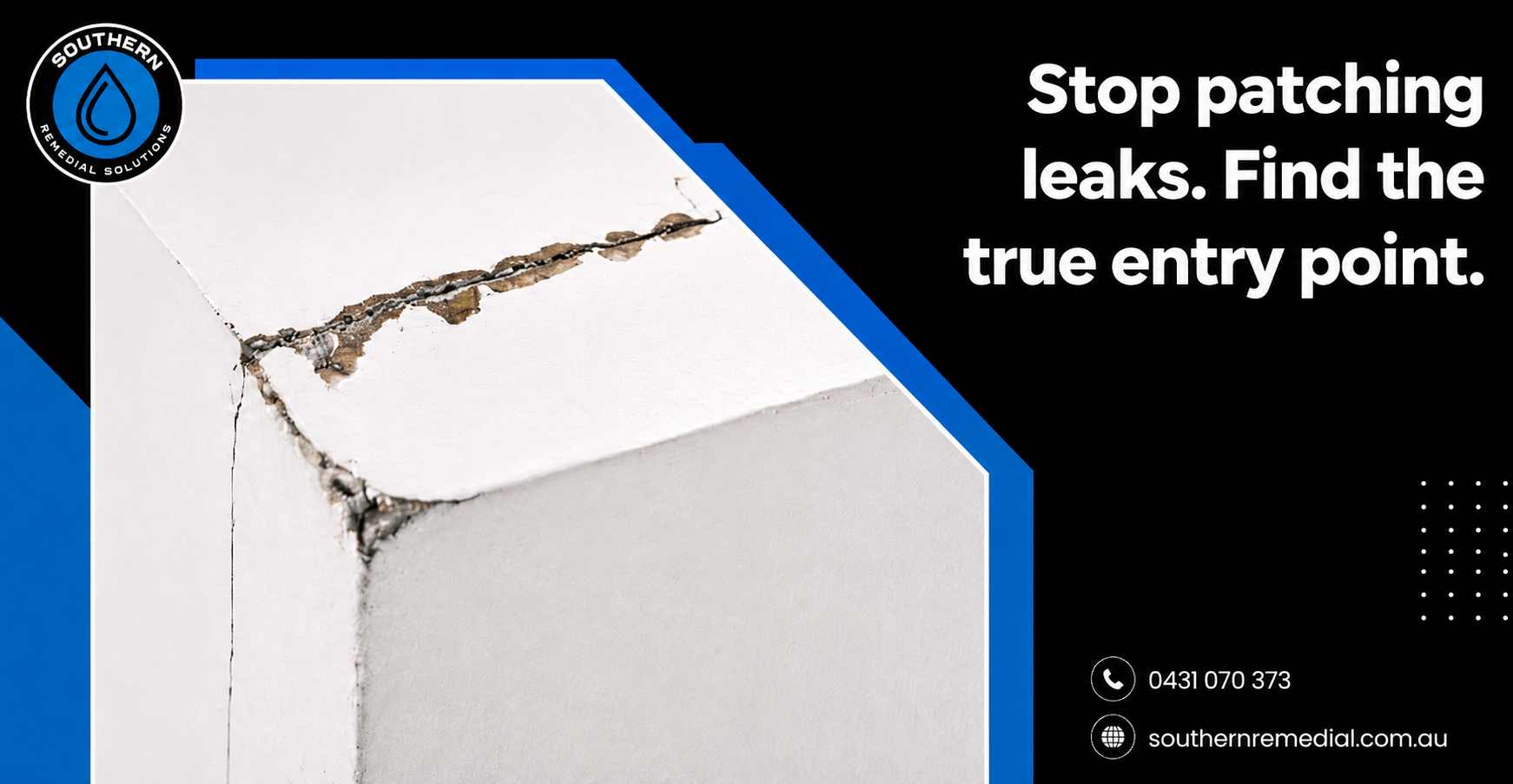
A 1990s brick walk-up in Wollongong develops water-filled paint bubbles on a balcony ceiling. The owner hires a painter after a bad coastal storm. The painter applies a fresh coat of exterior acrylic over the scraped concrete. The ceiling looks perfectly intact for a month. A November southerly hits. The bubbles come right back. We see this specific cycle constantly. Contractors often default to surface sealing without questioning the source. We believe this approach borders on negligence. Proper waterproofing in Illawarra requires tracing the moisture back to its origin.
The Damp Patch Is Often Not Where Water Gets In
Water follows gravity and building geometry. Moisture easily travels through internal wall cavities. It moves down the hollow cores of blockwork. Water can enter a third-floor expansion joint. The moisture might then emerge through a ground-floor light fitting. Gravity pulls the liquid downward. A solid obstacle eventually blocks the flow. The water pools against that barrier. It eventually soaks through to the visible surface. A ceiling stain rarely aligns perfectly with the exterior breach.
Why Sealing the Visible Leak Can Fail Again
Applying a patch over a damp spot traps moisture inside the wall cavity.
When the original entry point remains active
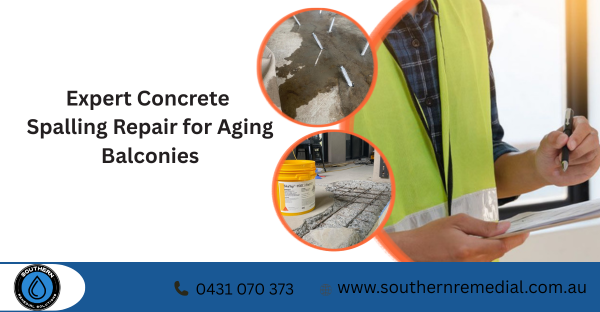
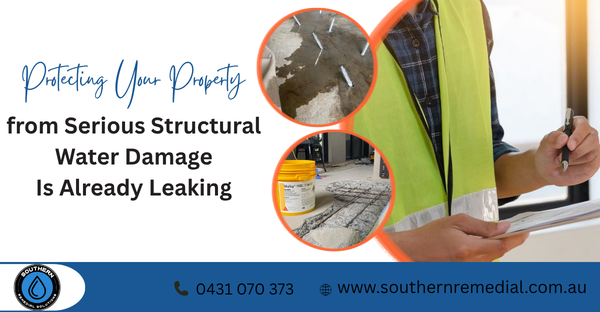
The exterior defect remains completely open to the weather. Rain continues to enter the structure. This ongoing moisture hits the new internal patch. Hydrostatic pressure builds up behind the fresh sealant. This pressure pushes the patch right off the concrete. Trapped water also attacks the internal steel reinforcement. Rusting steel expands. This expansion blows the face off the concrete. Fixing that spalled concrete requires expensive remedial building work.
When the leak has more than one pathway
A building rarely fails in just one isolated spot. A deteriorated window flashing often sits right above a cracked render system. Blocking the window leak simply forces the trapped water into the render crack. The moisture travels further down the wall structure. It eventually ruins the flooring below. We look for interconnected failures to avoid chasing leaks around a property.
What a Proper Water Ingress Investigation Looks For
A specialist works backward from the visual damage.
Tracing the moisture path back to its source
We start at the Wollongong balcony ceiling. We look for pathways above the stain. We flood-test the tiled deck directly overhead. We inspect the perimeter cavity flashings for accumulated debris. The actual issue is frequently a blocked weep hole hidden behind a skirting tile. We locate the true origin point through methodical testing.
Separating the symptom from the building defect
Staining indicates trapped moisture. A contractor might treat a ceiling stain with bleach. This cosmetic fix ignores the torn polyurethane membrane on the roof above. We find the membrane tear first. The surface stain gets addressed last.
The Building Defects That Commonly Keep Water Coming Back
Moisture typically enters through practical failure points in the exterior envelope.
Cracks, joints and movement
Buildings shift slightly as temperatures rise and fall. Applying a hard epoxy over an active expansion joint guarantees a fresh crack. The joint requires a flexible sealant to accommodate the thermal movement. Structural settlement also creates new pathways through concrete slabs over time.
Waterproofing and drainage failures
Standard liquid-applied polyurethane membranes generally turn brittle after a decade of coastal sun exposure. A brittle membrane develops micro-cracks. Water pools around a blocked floor waste. The liquid easily finds these microscopic flaws. You have to fix the drainage falls to protect the membrane system.
Why the Repair Method Depends on What Caused the Ingress
Different water pathways require entirely different technical interventions.
When crack injection makes sense
A specialist pumps hydrophobic polyurethane resin deep into a static concrete fissure. The resin reacts with the moisture inside the slab. It expands up to twenty times its original volume to block the pathway. This technique seals dormant structural cracks exceptionally well. However, injection fails completely on moving joints. An active settlement crack will tear the cured resin apart within months.
When waterproofing or structural repair is needed
A localized injection cannot fix a widespread membrane failure. Rusted internal rebar demands rust converters and specialized repair mortars. We refuse to apply cosmetic surface coatings over untreated spalled concrete. The structural integrity must be restored before applying any finishing product.
A Lasting Repair Starts Before the First Patch Is Applied
We returned to that Wollongong balcony property. We found blocked weep holes behind the skirting tiles on the upper deck. Clearing those drains allowed the internal cavity to dry out. We verified the upper deck was fully watertight. We only scraped and repainted the ceiling after that confirmation. The ceiling remains dry three years later. Lasting remedial building targets the start of the water's journey. You stop the breach at the source. The cosmetic finish is simply the final step. Reliable waterproofing in Illawarra demands this exact sequence.