How Concrete Remediation Brings Buildings Back from the Dead
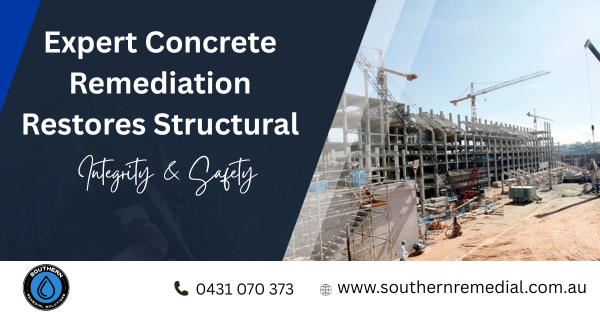
Structural “death” usually starts quietly. It may appear as concrete cancer, severe water ingress, or failing foundations. Reinforcing steel corrodes. Concrete begins to break apart. Small cracks widen. Over time, the structure loses both safety and value.
Yet demolition is not always the best answer. In many cases, careful remedial building work can restore the structure and extend its life for decades. Repairing a building protects the original investment and avoids the cost and waste of rebuilding from scratch.
This philosophy sits at the heart of modern concrete remediation. The goal is not just to patch visible damage. It is to understand the cause, stop the decay, rebuild the structure, and protect it from future problems.
Bringing a building “back to life” requires a clear and systematic process. Each stage builds on the one before it. Done well, the result is a structure that is stronger, safer, and ready for many more years of use.
How Concrete Remediation Brings Aging Buildings Back to Life
Step 1: The Forensic Diagnosis
Every repair project begins with one key question: What caused the damage? Without the right diagnosis, repairs only treat symptoms, not the real problem. That is why the first stage focuses on investigation.
A thorough site audit helps engineers and specialists identify the root cause of structural decay. This involves inspecting exposed surfaces, checking structural drawings, and documenting cracks, spalling, and water damage.
Many buildings suffer from similar hidden issues. One common culprit is carbonation, where carbon dioxide from the air slowly reduces the alkalinity of concrete. When this happens, reinforcing steel loses its protection and begins to corrode. Another frequent problem is chloride contamination, often caused by salt exposure in coastal environments or de-icing salts in parking structures. These chlorides attack the steel reinforcement and accelerate rust.
Waterproofing failure is another major trigger. When membranes break down, water penetrates deep into the structure. Over time, this moisture feeds corrosion and structural weakening.
Modern diagnostic tools allow specialists to look beneath the surface without damaging the building. Non-destructive testing methods such as cover meters, hammer sounding, and half-cell potential testing reveal the condition of the concrete and reinforcement. These tools help map the damage accurately.
A strong diagnosis sets the direction for the entire repair strategy.
Step 2: Halting the Decay (Stabilisation)
Once the problem is understood, the next priority is to stop further damage. A building cannot recover while decay is still active. Stabilisation ensures the structure remains safe during repair work.
In severe cases, temporary propping and shoring may be required. These supports hold structural elements in place and reduce load stress while repairs take place. Safety always comes first.
Moisture control is equally critical. If water continues to enter the structure, new repairs will quickly fail. The source of water must be identified and fixed. This may involve repairing drainage systems, sealing expansion joints, or replacing damaged membranes.
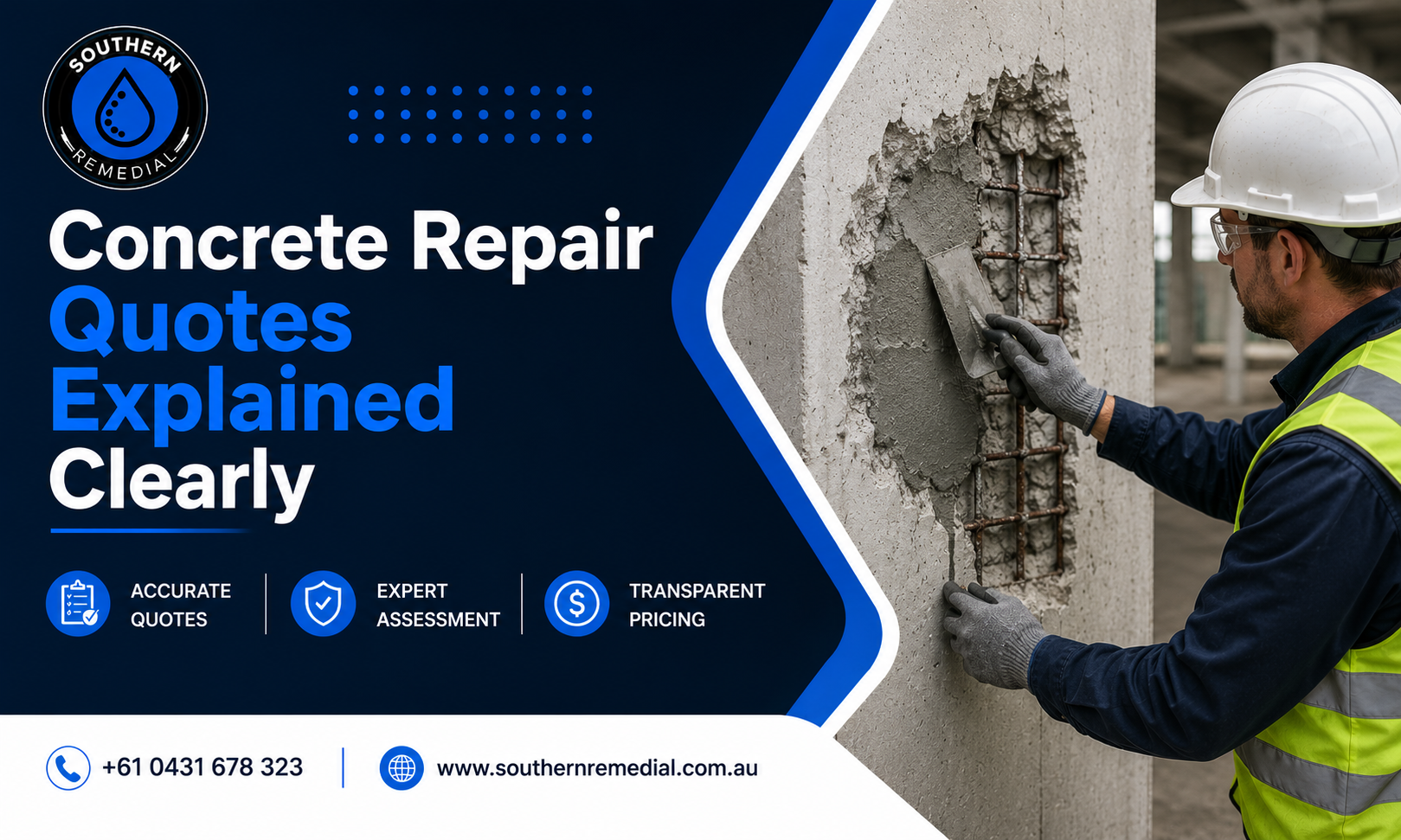
After stabilising the structure, technicians remove all deteriorated material. Spalled concrete is chipped away until only sound concrete remains. Exposed reinforcement bars are uncovered so their condition can be assessed.
This stage may look destructive, but it is necessary. Removing weakened concrete ensures that the repair bonds properly and restores structural integrity.
Understand what to do when waterproofing in Illawarra fails.
Step 3: The Reconstruction Phase
With decay stopped and damaged areas exposed, the rebuilding process begins. This stage restores strength to the structure. Each repair must integrate with the original design.
The first task is treating the reinforcing steel. Rust is removed using mechanical cleaning methods such as wire brushing or grit blasting. Once the steel is clean, technicians apply anti-corrosion primers. These coatings help protect the reinforcement from future corrosion.
Next comes the concrete repair itself. High-performance repair mortars are used to rebuild missing sections of concrete. These materials are engineered to bond strongly with the existing structure while matching its mechanical properties.
In areas where cracks threaten structural performance, epoxy injection may be used. This process fills internal voids and reconnects fractured concrete sections. When done correctly, the repaired area can regain its original strength.
Waterproofing then plays a critical role. Modern membranes, sealants, and protective systems are applied to vulnerable areas such as balconies, rooftops, and podium decks. These systems prevent moisture from entering the structure again.
Step 4: The Aesthetic Resurrection
Structural repairs restore safety, but appearance matters too. Buildings are part of their streetscape. A good repair should look as good as it performs.
Protective coatings are often applied to repaired surfaces. These coatings shield the structure from UV exposure, moisture, and pollutants. They also provide a consistent finish across old and new surfaces.
Special care is taken to blend repairs with the original architecture. Colour matching, texture finishing, and careful detailing help ensure the repairs are visually seamless. The goal is to make the intervention almost invisible.
This stage also improves the building’s market value. A well-restored structure looks cared for and secure. Property owners regain confidence. Tenants and buyers see a building that is stable and well-maintained.
The final result is not just a repaired structure, but a renewed one.
Explore how concrete spalling leads to new building leaks.
Concrete Remediation by Southern Remedial
Saving existing structures brings important environmental benefits. Demolition produces large amounts of waste and releases significant carbon. By extending the life of a building, concrete remediation reduces this environmental impact and preserves valuable materials.
Professional repair also provides peace of mind. Skilled specialists understand how structural systems behave and how deterioration spreads. With proper planning and execution, a building that once looked beyond repair can remain safe and functional for decades.
Buildings rarely fail overnight. Damage grows slowly, often hidden beneath the surface. Early intervention through expert remedial building work can prevent small problems from becoming major structural failures.
If your property shows signs of structural deterioration, it may not be the end of the road. It may simply need the right repair strategy.
Southern Remedial will assess your building and provide a clear structural health check-helping bring aging structures back to life.