7 Signs Your Concrete May Need Professional Repair

Picture a balcony edge with one thin crack and a faint rust-coloured streak below the crack. You could fill the crack and repaint the area, which may make it look better. But if moisture has reached the steel inside the concrete, the visible mark may only show the start of a larger problem.
Concrete damage can extend further than the surface suggests. Southern Remedial advises identifying the cause before choosing a repair method. A quick patch can hide damage without stopping the process behind it.
Not every crack needs major work, but changing cracks, recurring moisture, rust, movement and loose concrete deserve more attention.
Cracks That Change Are More Important Than Cracks That Exist
Sign 1: Cracks Are Widening, Spreading or Changing Direction
Watch what the crack does over time. If it extends across a slab, opens further or reappears after repair, it may indicate ongoing movement in or around the concrete.
If a changing crack has you searching for concrete crack repair near me, do not judge the problem by width alone. Location, pattern, nearby moisture and changes in the surrounding concrete add important context. Cracks around balcony edges, walls, beams or other structural elements need more care because a surface repair may not address the cause.
Uneven Concrete Can Point to Movement Below the Surface
A slab does not need to break apart before it causes trouble.
Sign 2: Slabs Are Sinking, Lifting or Becoming Uneven
A driveway section may drop while the next slab stays level, or one edge of a path might lift above the other. You might also notice adjoining slabs no longer meeting cleanly. Southern Remedial lists sunken and uneven concrete among the defects that may require remediation.
Uneven concrete can create a trip hazard and may also change the way water drains around the slab. If the level keeps changing, patching the surface may not address the underlying cause, so the source of the movement needs assessment before repair.
Water and Rust Can Reveal Deterioration Inside the Concrete
Moisture can provide an early clue that damage extends below the surface because cracks and failed joints may give water a path into the concrete.
Sign 3: Damp Patches or White Deposits Keep Returning
A damp mark that returns deserves investigation, and white, powdery deposits can also indicate moisture movement. The term efflorescence describes these deposits, which form when water carries salts to the surface.
Cleaning the stain may improve the appearance, but it does not stop the moisture source. The next step is to identify where the moisture is coming from before treating the surface.
Sign 4: Rust Stains Are Appearing on the Surface
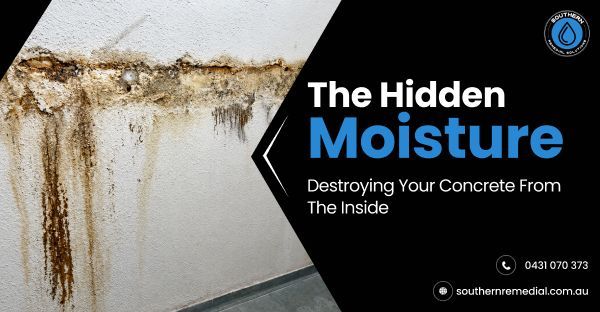
Rust-coloured streaks sometimes signal corrosion of steel reinforcement below the surface. The corrosion products that form on reinforcing steel occupy more volume than the original steel. As they build up, they press against the surrounding concrete. That pressure can contribute to cracking, delamination or spalling.
Treat the cause before covering the stain, because painting over it does not address corrosion that may already be occurring inside the concrete.
Surface Breakdown Can Mean the Concrete Is Losing Integrity
Once concrete starts breaking away, the problem has moved beyond simple discolouration.
Sign 5: Concrete Is Spalling, Flaking or Sounding Hollow
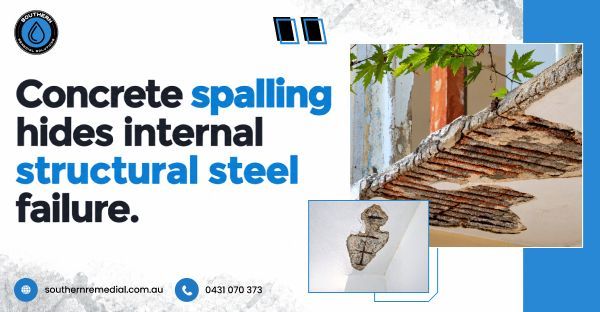
Spalling may appear as small flakes or as larger sections breaking from the surface, while some damaged areas sound hollow, or “drummy,” during an inspection.
A hollow sound may point to separation beneath the surface. The visible edge may not show the full affected area.
A lasting repair usually requires removal of loose material and treatment of the cause.
Sign 6: Reinforcement Is Becoming Visible
Exposed reinforcement gives you a clear reason to seek professional advice. If deterioration has exposed the reinforcement, that area has already lost its concrete cover.
A cosmetic patch can leave the underlying problem active. A contractor needs to assess the steel and the surrounding concrete, and if corrosion has reduced the reinforcement, the job may also require engineering input.
Recurring Damage Suggests the Root Cause Is Still Active
The repair history often tells you as much as the defect itself.
Sign 7: Cracks, Patches or Surface Damage Keep Coming Back
When the same crack reopens, the first repair may have treated only the symptom, while recurring paint blistering may suggest that moisture remains involved. If a patched area starts breaking down, ask whether the original repair dealt with the cause.
Ongoing movement is one possibility. In other cases, water may still be entering or reinforcement may continue to corrode beneath the patch. The right repair depends on which process drives the failure.
When Professional Assessment Becomes the Practical Next Step
Book an assessment when damage keeps changing or returns after repair. Rust staining, exposed steel, loose concrete, persistent moisture or noticeable movement also justify a closer look.
When a search for concrete crack repair near me leads you to several providers, favour one who assesses the cause before proposing a patch.
Not every small defect needs a major project, but a neat surface repair makes little sense if the concrete needs diagnosis first.
The most useful question is not, “How bad does this look?” but “Is something still causing this damage?” If the answer may be yes, professional assessment gives you a better starting point than another patch.