How Reinforcement Corrosion Leads to Concrete Spalling

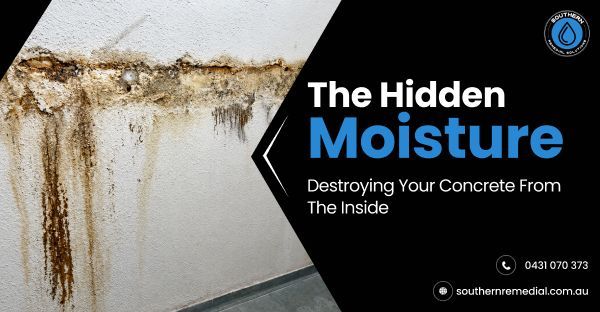
Picture a strata manager inspecting the underside of a balcony after rain, where a narrow rust stain runs from a small crack near the edge. Most of the concrete still feels solid, so a surface patch might seem reasonable.
That stain matters because corrosion can already be active inside the concrete.
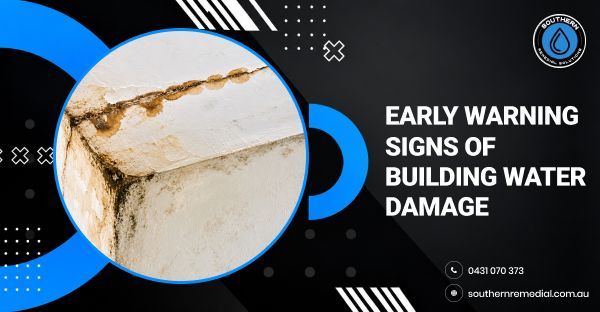
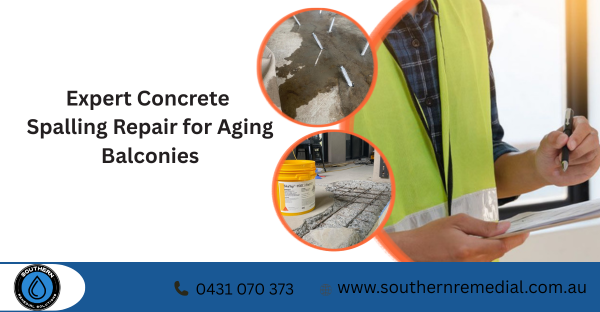
Rust stains, cracking and exposed reinforcement can point to corrosion beneath the surface. Southern Remedial identifies these as warning signs that may extend beyond the visible damage.
In remedial building work, covering the defect comes after diagnosis. First establish what caused the steel to corrode, then determine how far the deterioration extends.
Corrosion Begins When Reinforcement Loses Its Protection
Concrete does more than hold reinforcing steel in position because its alkaline environment also helps protect the steel from corrosion.
Over time, carbonation or chloride exposure can weaken that protection.
Carbon dioxide can enter the concrete and cause carbonation, which lowers the alkalinity around the reinforcement as it advances. Once carbonation lowers the alkalinity around the steel enough to weaken its protective environment, corrosion can start when moisture and oxygen are present.
Carbonation Changes the Concrete Around the Steel
Carbonation usually progresses from the exposed surface towards the reinforcement.
Owners cannot see this chemical change from outside the building. Meanwhile, the environment around the steel can become less protective even when the concrete still looks sound.
As a result, the loss of protection around the reinforcement may progress beneath the surface before any visible warning sign appears.
Chlorides Can Trigger Localised Corrosion
Chlorides can enter concrete when salt-containing moisture reaches and moves through the concrete. When enough chloride reaches the reinforcement, it can disrupt the protective layer around the steel and allow corrosion to begin.
This issue deserves particular attention where concrete faces salt exposure or persistent moisture.
Moisture, oxygen and reactive ions can support the electrochemical reactions involved in ongoing corrosion.
Expanding Corrosion Forces the Concrete Apart
Steel corrosion can do far more damage than leave a visible stain.
As steel corrodes, corrosion products form around the bar and can occupy more volume than the steel lost during corrosion. Their expansion places pressure on the surrounding concrete.
Although concrete handles compression well, expansion around the reinforcing bar creates tensile stress in the concrete cover.
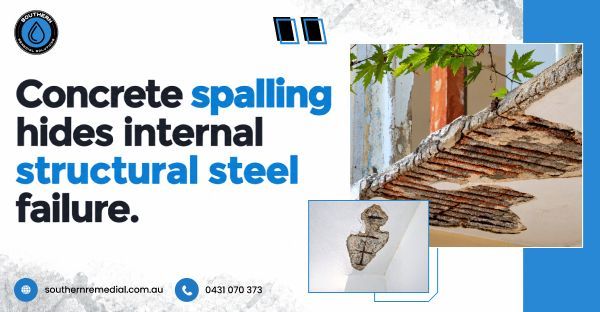
Cracks can then form. As corrosion continues, those cracks may join and spread along the reinforcement. Concrete can start to delaminate, and pieces may eventually loosen or fall away.
How Surface Symptoms Progress
A rust stain or fine crack may provide the first visible sign. Later stages can show bulging concrete, hollow-sounding areas or broken sections around the reinforcement.
Exposed steel can indicate more advanced deterioration. By then, the structure may already have lost some of the concrete cover that helped shield the reinforcement from the surrounding environment.
Visible Spalling Rarely Defines the Full Repair Area
The repair boundary can extend well beyond the visible break. A spall shows where deterioration has reached the surface, not where corrosion starts and stops.
Corrosion may continue along reinforcement behind concrete that still looks sound. Delamination can spread beyond the crack or missing section. Southern Remedial therefore recommends inspection and mapping of affected areas before setting the repair scope.
What a Condition Assessment Needs to Confirm
To establish that boundary, an assessment should determine how much concrete has become unsound and check the condition of the reinforcement.
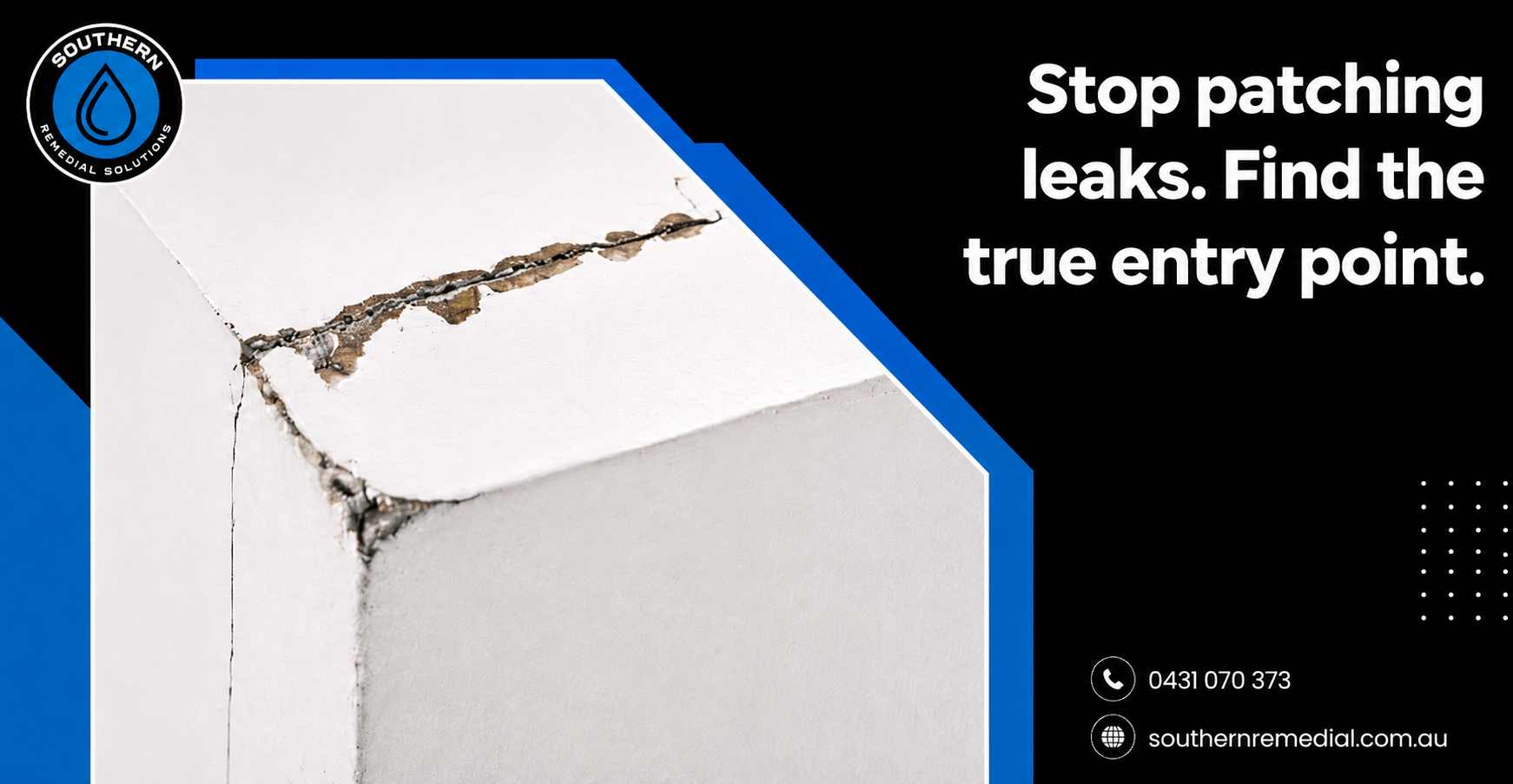
Inspectors then look for the conditions that allowed corrosion to develop. Those conditions may include cracks, failed waterproofing, leaking joints, drainage problems or ongoing moisture entry.
The findings should guide the repair scope.
A Durable Repair Must Address the Cause, Not Just the Spall
A quick patch can restore the appearance of a small damaged area with less immediate work. That approach can make sense when an assessment confirms that the problem remains genuinely local.
The risk comes from assuming that every small spall represents a small corrosion problem, so the repair scope should follow the extent of deterioration found during assessment.
If a patch leaves affected reinforcement or ongoing moisture untreated, the conditions that support corrosion may remain. The repaired surface may look sound while deterioration continues nearby, so the repair should address the underlying corrosion conditions as well as the visible damage.
That is why remedial building work should follow the diagnosis rather than the size of the visible patch.
When Localised Concrete Repair May Be Suitable
Local repair can suit a clearly defined area when the surrounding concrete remains sound and the investigation finds no wider deterioration.
Even a small repair needs proper preparation. The contractor needs enough access to the affected reinforcement and to sound concrete around the repair zone.
When Broader Corrosion Control May Be Needed
The scope may need to address larger areas of damaged concrete, ongoing water entry, failed protective systems or continuing corrosion beyond the original defect. Inspection findings should help determine which measures the building needs.
Certain Signs Make Spalling a More Urgent Problem
Not every surface mark signals a structural emergency. Clear signs of corrosion still deserve more than a cosmetic response.
Loose concrete creates an obvious safety concern where people or property sit below it. Exposed reinforcement, widening cracks, hollow areas and recurring deterioration around previous repairs also justify prompt investigation.
Early assessment helps the owner decide whether the building needs a limited repair or broader remediation.
The visible spall marks the point where an internal process has reached the surface. A sound repair strategy starts by identifying that process, then defines the affected area and addresses the conditions that may allow corrosion to continue.