How to Spot Concrete Cancer Before It Spreads
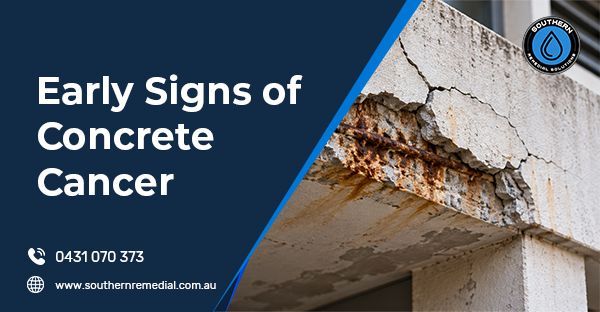
A rust stain under a balcony rarely looks dramatic on day one. Near a slab edge, a fine crack can look harmless too, especially on an older building where small marks are easy to dismiss. The problem is not the mark itself. It is what the mark is telling you.
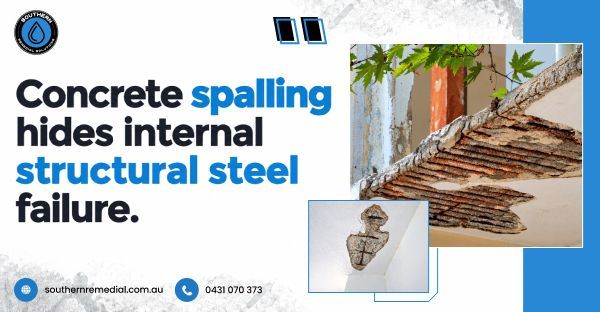
Concrete cancer usually gives small warnings before the surface breaks away. Moisture finds a path in, the reinforcement begins to corrode, and the expanding steel loosens the concrete around it. By the time the concrete face starts to flake, the damage has often been active for longer than most owners realise.
A crack is not the whole story
Not every crack points to corrosion. Some are surface cracks; others come from shrinkage, joint movement, settlement, or patch repairs that have aged badly. A crack becomes more serious when it sits beside rust staining, lifted edges, or a patch of concrete that sounds hollow when tapped.
Owners often see the crack and stop there. On an inspection, the crack is only the clue. The real question is what sits behind it.
If the concrete is still bonded and the crack is stable, epoxy injection may form part of the repair. If the surrounding concrete has lost its bond, sealing the crack is not enough for the damage in front of you. The repair has to match the condition, not the wishful version of it.
The signs people keep walking past
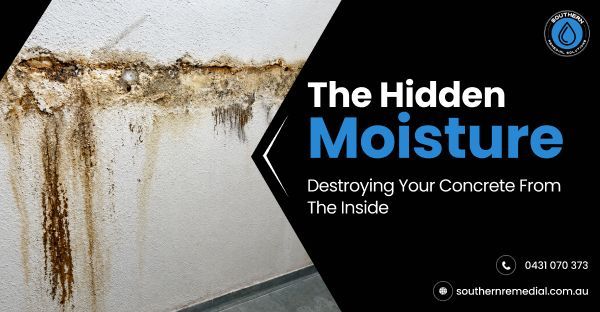
Rust streaks are the first warning you should take seriously. They often show up beneath balcony edges, planter boxes, soffits, or the underside of suspended slabs. The stain is not the problem on its own. It is the path water has already taken through the concrete.
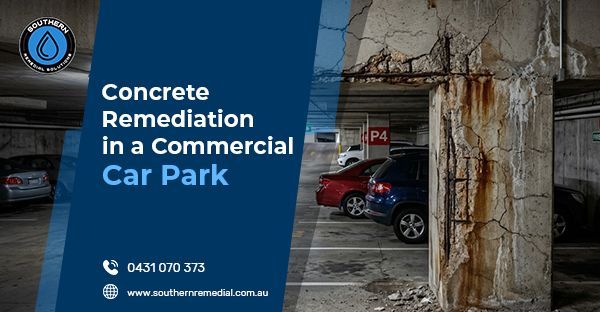
Tap around a balcony edge, a podium deck, or an old car park slab and the weak areas stand out fast. Sound concrete gives a firm response. Delaminated concrete does not. It has lost its bond somewhere below the surface, even if the face still looks intact.
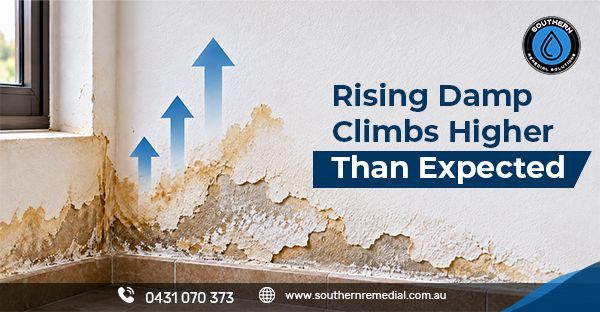
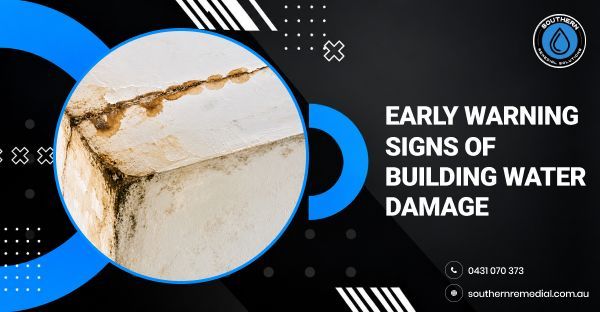
Blistered coating and flaking render are worth looking into. Paint does not lift from concrete for no reason. In ageing buildings, this often points to moisture behind the finish, failed waterproofing, or a crack line opening under the coating.
Loose tiles. A damp patch that returns after rain. A corner of concrete that crumbles when brushed. Small things, but they usually sit on top of a bigger fault. On coastal properties, salt air speeds the process up. On older unit blocks, worn waterproofing and tired joints open the same path for water.
Why does the damage keep moving
Once corrosion has started, it rarely stays still. As steel rusts, it expands and pushes against the concrete around it. That pressure opens the crack a little more. More water gets in. More steel corrodes. More concrete comes loose. The cycle keeps giving moisture another opening.
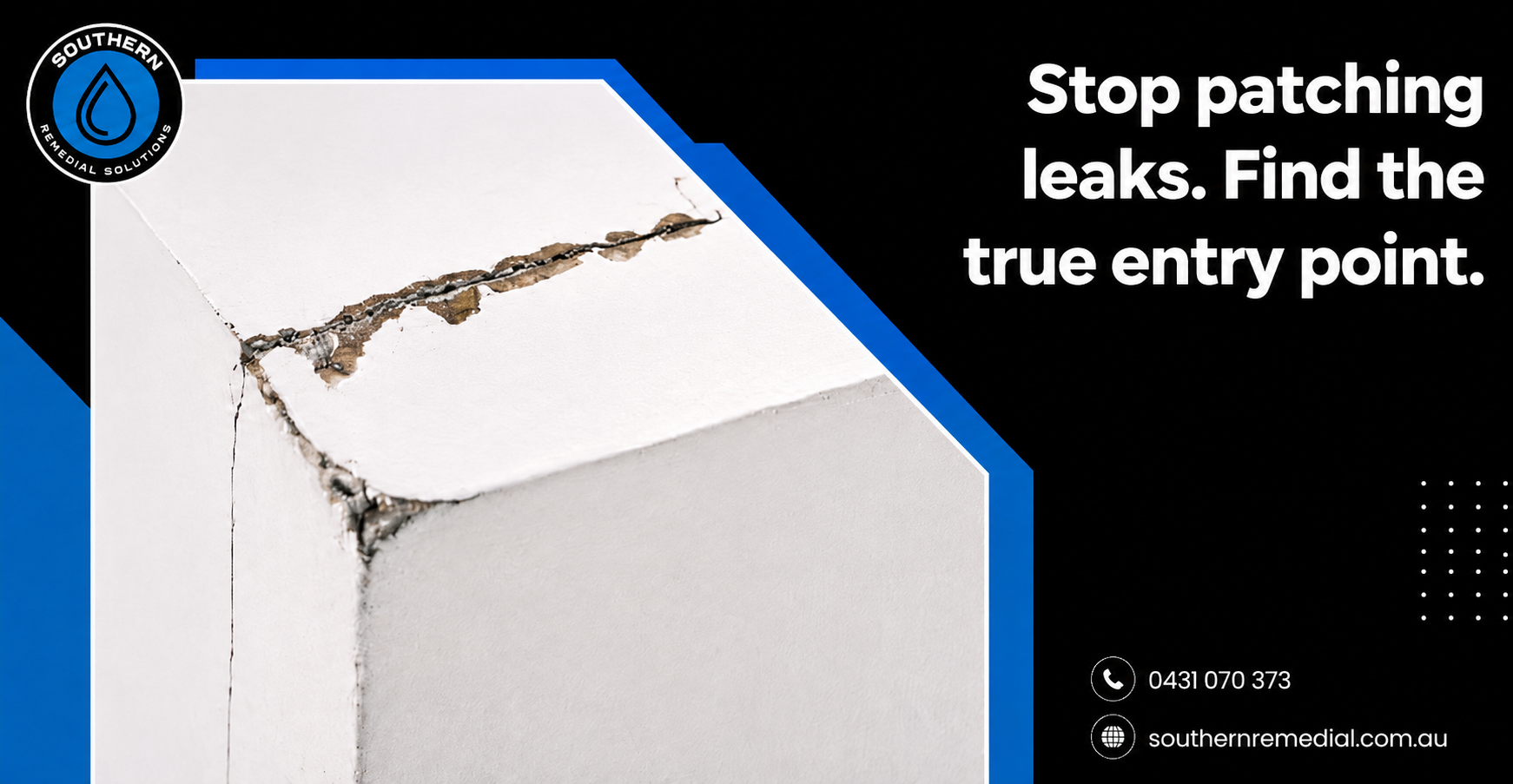
That is why cosmetic patching so often disappoints. A quick fill over a rust stain can improve the look for a while, but it leaves the steel and the water path untouched. If a balcony membrane has failed, or water is running through a construction joint, the staining will come back. So will the crack.
You can see the same pattern in retaining walls, basement car parks, podium decks and suspended slabs. Once water gets through a crack, joint or failed membrane, the damage often spreads farther than the visible patch suggests. The worst decay is usually just out of sight.
How repair choices are actually made
Good concrete repair contractors do not start by guessing at a fix. They look at the pattern of damage, the depth of delamination, the condition of the reinforcement, and the moisture source. That means checking whether the crack is stable or active, whether joints have opened, whether waterproofing has failed, and whether slab edges are deteriorating where water collects first.
A stable hairline crack is a different problem from a hollow slab edge, exposed reinforcement, or concrete that breaks away under light pressure. If the crack is stable and the concrete remains intact, epoxy injection may be suitable. If there is spalling, exposed reinforcement, or weakened cover, the repair usually shifts toward concrete removal, steel treatment, reinstatement, and a protective coating. If waterproofing has failed, that needs attention too. Otherwise, the repair is only treating the symptom.
The best repair is not the one that looks tidy on day one. It is the one that stops the same damage from returning next wet season.
When to stop guessing
Once rust staining appears, cracks start widening, or sections sound hollow, it is time for an inspection. A photo helps, but it cannot show whether the concrete around the mark has lost bond. The area around the visible defect matters just as much as the defect itself.
An inspection should do more than name the crack. It should check the surrounding concrete, map hollow areas, look for exposed or corroding steel, and trace where water is getting in. Painting over the stain, sealing only the visible crack, or waiting because the defect looks small can leave the cause untouched.
Concrete cancer usually starts with changes that are easy to walk past. That is why the first sign is usually not the crack. It is the stain, the sound, the loose edge, the damp patch that keeps returning. Catch those early, and you still have options.