How Technology is Revolutionizing Concrete Remediation Diagnostics
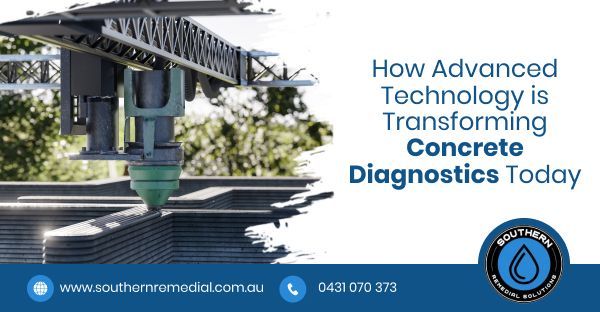
Traditionally, assessing concrete damage involved drilling, coring, or visual inspections. These methods could be slow, invasive, and sometimes unreliable. They often missed internal defects and required sections of concrete to be removed just to see what lay beneath. For remedial building professionals, this meant extra time, higher costs, and disruption for building owners.
Today, modern diagnostic tools are reshaping how we assess and repair concrete. They allow engineers and contractors to “see” inside concrete structures without damaging them. This means faster, more precise results that guide better
concrete remediation
strategies and long-term maintenance planning.
Non-Destructive Testing Technologies in Concrete Remediation
Non-Destructive Testing (NDT) has become the foundation of modern concrete diagnostics. It uses advanced sensors and imaging tools to detect hidden issues while leaving the structure intact.
- Ground Penetrating Radar (GPR)
Ground Penetrating Radar is a powerful tool for locating rebar, voids, and structural inconsistencies within concrete. It sends electromagnetic waves through the surface, producing detailed subsurface maps.
Faster assessments, minimal disruption – Unlike drilling or coring, GPR allows specialists to scan large areas quickly without interfering with building use. The results are immediate and highly accurate, helping engineers design targeted repair plans.
- Ultrasonic Testing
Ultrasonic testing uses high-frequency sound waves to identify internal cracks and delamination. It’s especially useful for pinpointing defects that can’t be seen with the naked eye.
Accurate thickness measurement – The method also provides precise data on concrete thickness and uniformity, ensuring that repairs are based on real structural information rather than guesswork.
- Infrared Thermography
Infrared thermography detects temperature variations on concrete surfaces, revealing moisture intrusion and hidden defects.
Discover hidden problems in your home that require remedial building work.
Digital Documentation and 3D Imaging in Remedial Building Solutions
Digital tools now play a major role in recording and communicating inspection results. They offer a clear visual reference for all stakeholders involved in concrete remediation projects.
- 3D Laser Scanning
3D laser scanning captures millions of data points to create an exact digital model of a structure. These models allow engineers to measure distances, assess alignments, and visualise deterioration with unmatched precision.
- Digital Mapping of Defects
Digital mapping software links inspection data to specific locations on a structure. Engineers can mark areas of corrosion, cracks, or delamination directly onto a digital model. This ensures everyone – from inspectors to contractors – is working from the same, accurate information.
- Better Client Communication
For building owners and managers, visuals make technical reports much easier to understand. Digital images, 3D models, and mapped data help communicate findings clearly and justify repair recommendations with confidence.
Real-Time Data Analysis
The move toward real-time data processing is another leap forward for the industry. Modern diagnostic equipment now delivers instant insights during inspections.
- Instant Results
With immediate access to test outcomes, remedial specialists can make faster decisions. Issues are identified and prioritised on-site, reducing project timelines and avoiding unnecessary delays.
- Cloud-Based Reporting
Cloud platforms allow teams to upload and share inspection data instantly. Whether on-site or in the office, everyone involved can access the latest information, improving coordination and transparency.
- Data-Driven Decision Making
Reliable data means repairs are designed based on evidence, not assumptions. This ensures concrete remediation efforts are both targeted and effective, extending the life of the structure while controlling costs.
Benefits for Building Owners and Managers
Technology-driven diagnostics bring practical benefits to property owners and managers who rely on durable, safe buildings.
- Cost Savings Through Early Detection
Identifying defects early prevents minor issues from becoming expensive repairs. Timely action helps manage budgets and avoid emergency work later.
- Reduced Downtime and Disruption
Because modern testing is non-invasive, it can often be performed while the building remains in use. That means tenants, staff, or residents experience minimal disruption.
- More Accurate Repair Specifications
Detailed diagnostic data allows engineers to specify exactly what’s needed – no more, no less. This accuracy prevents over-repairing and ensures materials and labour are used efficiently.
- Extended Building Lifespan
By understanding what’s happening inside the concrete, owners can plan proactive maintenance rather than reactive repairs. The result is a safer, longer-lasting structure and a more predictable maintenance cycle.
How waterproofing your basement increases the long-term property value of your home.
The Future of Concrete Remediation
Technology in the building industry is advancing rapidly. The next generation of diagnostic tools promises even greater precision and insight.
- AI and Machine Learning
Artificial intelligence can analyse inspection data to predict where future deterioration might occur. Over time, this predictive maintenance approach will reduce reactive repairs and help allocate resources more effectively.
- Integration with Building Management Systems
Linking diagnostic tools with digital building management systems will enable continuous monitoring of concrete structures. Engineers will be alerted automatically to early warning signs such as changes in moisture or temperature patterns.
- Continuous Monitoring
Permanent sensors embedded in structures can feed live data on stress, vibration, or corrosion. This creates a constant stream of information for better long-term maintenance planning.
Modern technology is redefining how we understand and maintain our concrete structures. From non-destructive testing and digital mapping to real-time data analysis, these innovations deliver insights that were once impossible to achieve.
Technology-driven concrete remediation diagnostics now offer faster, more accurate, and more cost-effective results. They empower engineers and building owners to make informed decisions that protect assets and extend their lifespan.
If your property is showing signs of concrete wear, corrosion, or cracking, it’s worth seeking a professional remedial building assessment. Advanced diagnostic tools will give you the clarity you need — and the confidence that your structure is in safe, capable hands.